A staple for families across the UK, the Ford Focus came to light after the much-loved Ford Escort was withdrawn from the market. The process didn't start without hiccups, with the name 'Focus' being attributed to a popular German magazine. After settling out of court, thanks to a sizable charity donation from Ford, the Ford Focus was allowed to move forward. As it turned out, that was a very good decision. The Focus won European Car of the Year in 1999 and became a much-loved household name, cementing itself as one of Britain's most popular family cars.
So, what was it about the Focus that made it so popular? Its family-oriented design and practical features, paired with agile handling and an engaging driving character, all at an affordable price tag, made the Ford Focus an instant hit. And it wasn't bad-looking either, with fluid, radical styling for its day making it a real head-turner on the road.
With the final Focus rolling off the production line in September 2025, we look back at a car that could be a sensible family hatchback for one person, and a fire-breathing hot hatch for another.
First Generation (1998 to 2004)
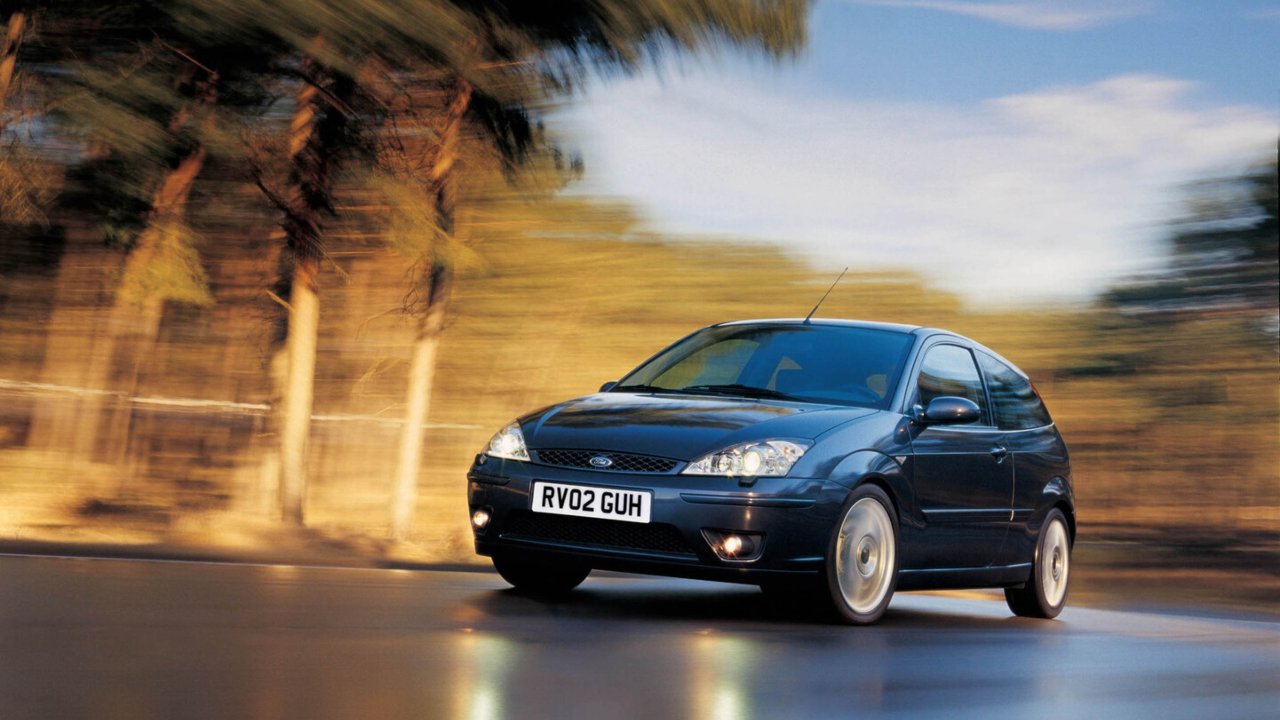
The first generation Focus landed with a bump in 1998, hailed as a bit of a revolution in car design. Its newly-engineered independent 'Control Blade' rear suspension outmatched its rivals, delivering an agile ride and top-level handling. It also came with a range of powertrains to suit every type of driver, from an economical 1.4-litre petrol to the diesel engines that offered excellent long-distance fuel economy. Outside, the Focus featured unique, sharply curving lines paired with triangular styling, making it different from anything else at the time.
Initially, it was a chalk-or-cheese moment for driving enthusiasts and the motoring press, loved by some and not so much by others. The Ford Focus started to convince the critics that this car was a bit unique, and the following year, in 1999, it won European Car of the Year, beating off rivals such as the Vauxhall Astra by a long way. There were also saloon and estate versions for those who needed extra ride comfort and space, respectively.
In 2001, the Focus received a facelift, updating the equipment levels, refining the exterior styling, and making it even more desirable. So much so that its smaller cousin, the Ford Fiesta, eventually mirrored its design language in 2002. And of course, the Focus entered the hot hatch market with an everyday driving performance model, known as the ST170, Including an estate version.
For true petrolheads, the all-singing, all-dancing World Rally Championship-inspired Focus RS arrived in late 2002, and it could launch from 0 to 62mph in around 6.7 seconds, thanks to its 2.0-litre turbocharged Duratec RS engine, which produced 212bhp. It also came with a whole host of tuning modifications to handle the power, an AP Racing clutch and Sachs Racing dampers. Engineered to rival the Subaru Impreza WRX and Mitsubishi Evo, the RS had many admirers, although unlike its rallying inspiration, it remained front-wheel drive (FWD) rather than adopting four-wheel drive, confusing some hot hatch fans.
The first-generation Focus made an impact in the family hatchback market, combining everyday practicality with world-class driving dynamics and a unique design DNA that would become a defining part of the Focus name.
Second Generation (2004 to 2010)
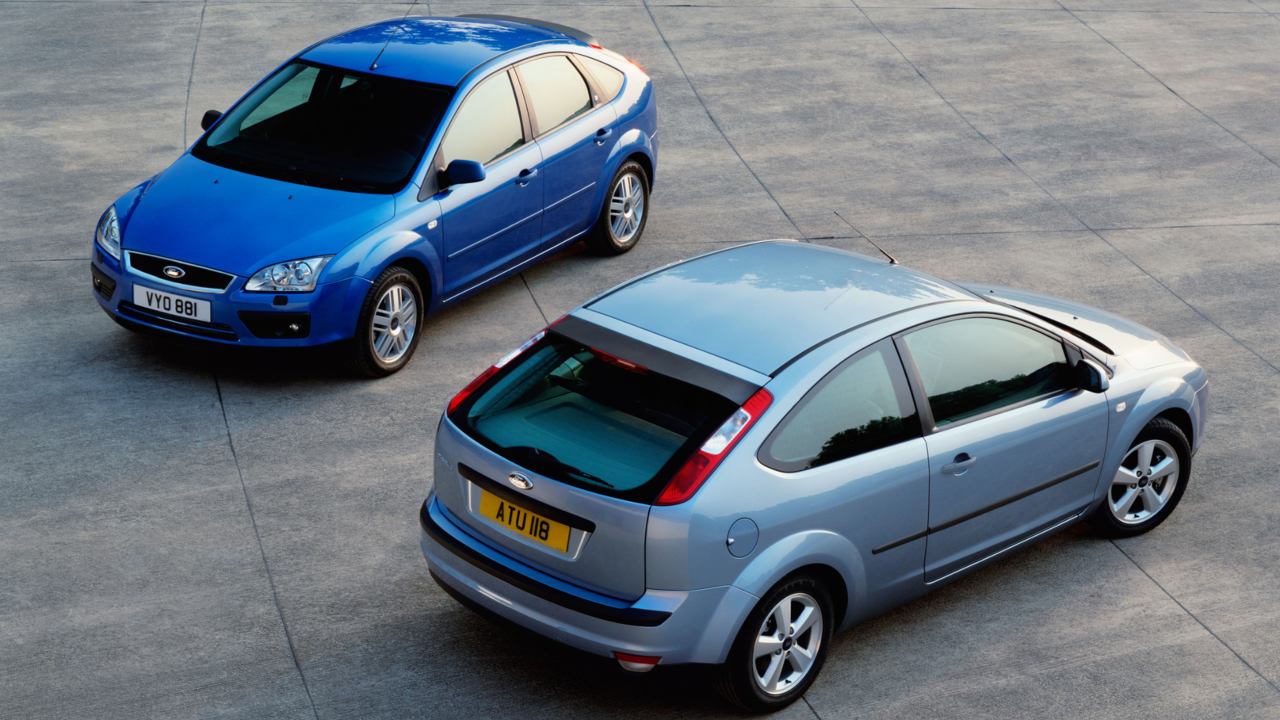
In 2004, riding on the success of the first version, Ford introduced the second-generation Focus. It didn't have the same impact as the first generation because of its rounder styling, which lost some of that initial edge, but it was bigger (and heavier), offering a more measured driving experience. The 'Control Blade' rear suspension was so successful that it was brought across with little modification and installed into the newer Focus, delivering a similar handling experience. It was also built on Ford's C1 platform, which also housed the Mazda3 and Volvo S40, as well as the popular SUV, the Ford Kuga.
With a new outlook, it offered better practicality and a decent set of powertrains; some were brought over from the first-gen Focus and upgraded, including the bulletproof 1.6-litre petrol brought over from gen one, and some fresh powertrains, including the ultra-reliable 1.8 Duratec and 2.0-litre TDCi diesel, which is configured for long-distance driving. The interior was carved out to offer better leg and headroom, while the rear overhang gave you a flat, functional boot load space.
The Focus also entered the convertible market with a two-door coupé-cabriolet variant, known as the Focus Coupé-Cabriolet. This gave buyers the option of summer-ready folding-roof motoring while retaining the practicality and familiarity of the Focus name.
In 2008, Ford released the routine facelift of the Focus, using the 'Kinetic Design' language seen in Mondeo, Galaxy, and S-Max, bringing unity to the range. Although the profile of the Focus generally stayed the same, every panel, except the roof, went through a re-sculpting, leaning into the Focus model's more muscular look. Bolder wheel arches, a contoured tailgate, and trapezoidal grilles were just some of the refinements that were changed. Trims got updated along with other details throughout, consistent with Ford's attention to thoughtful design.
And of course, both the popular ST and RS performance models were upgraded. Both featured the same 2.5-litre turbocharged petrol engine with outputs of 222bhp for the ST and a more race-tuned 297bhp for the RS, which gave it a 0 to 62mph in 5.9 seconds and a top speed of 163mph. With power sent to the front wheels, it used a 'RevoKnuckle' front suspension system, which solidified its handling. In 2010, Ford upped the ante and released the RS500. A special edition version of the RS, limited to 500 models, and only 101 allocated to the UK. With uprated power to 345bhp and 19-inch wheels, among a list of tweaks. Released in 2010, it was Ford's final nod to the second-generation Focus, paving the way for more refinement through the series.
Third Generation (2010 to 2018)
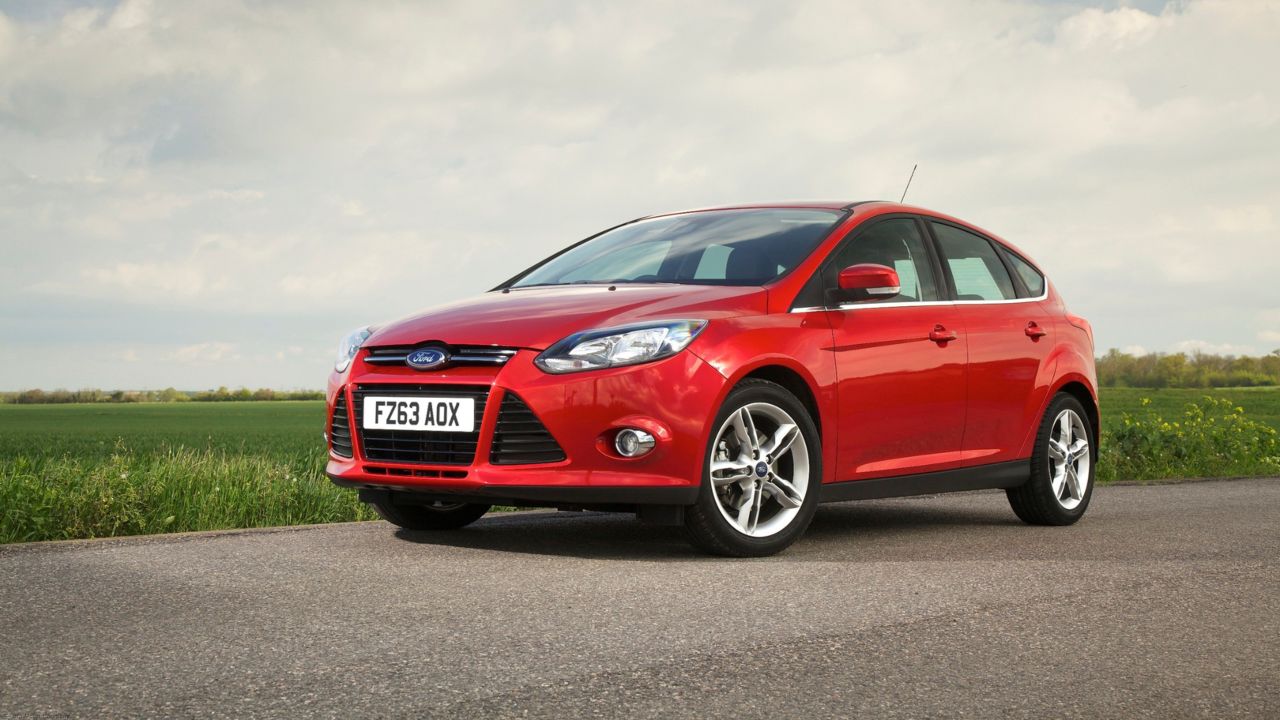
Back in 2006, CEO Alan Mulally launched Ford's 'One Ford' plan, a strategic overhaul designed to pull the company back from bankruptcy by creating greater consistency across global operations and engineering universal vehicle platforms. The third-generation Ford Focus was the first of these cars designed and built as a truly global model sold as a single version in both the European and North American markets. It also dropped the saloon and coupé-cabriolet bodystyles, offering only hatchback and estate variants.
Like the previous generation, the third-generation Focus had more of Ford's 'Kinetic Design' language built into its architecture, which gave it more fluid, sleeker lines and a completely redesigned dashboard with an infotainment system, stepping away from the second generation's muscular, boxy frame and utilitarian-style cabin. The downside of the shape and styling was reduced rear passenger headroom, while the steeper rear tailgate reduced boot capacity. However, even with these practical drawbacks, the Focus remained a firm favourite with drivers and was crowned the world's best-selling car in 2012.
The third generation brought a new range of powertrain options. The 1.0-litre EcoBoost turbocharged petrol was a popular choice, offering a balance of power and fuel efficiency, while the first Ford Focus electric was released in 2013. The latter wasn't a great success, and although it had 143bhp, it had a limited range of around 65 miles in real-world conditions, which is tiny compared to today's EVs.
When the facelift came along in 2014, one of the most notable features was the grille redesign. Gone was the slim grille of old, and in came a more aggressive, bolder format. Taking inspiration from Aston Martin's front end, it featured a chrome finish in some trims, while others had a black finish.
The ST and RS Focus models also had a few upgrades, including a unique honeycomb grille design and an estate body on the ST, bringing a sense of practicality to the sports model. They also had a powertrain revamp, with the ST getting a 247bhp 2.0-litre EcoBoost, while the RS came with a quicker 345 bhp 2.3-litre EcoBoost engine borrowed from the Ford Mustang. The RS was also the first Focus to feature all-wheel drive. For added performance value, the RS also came with a 'Drift mode' setting that sent 70% of the engine torque to the rear axle, allowing controlled powerslides on track days. A firm favourite among RS drivers.
Fourth Generation (2018 to 2025)
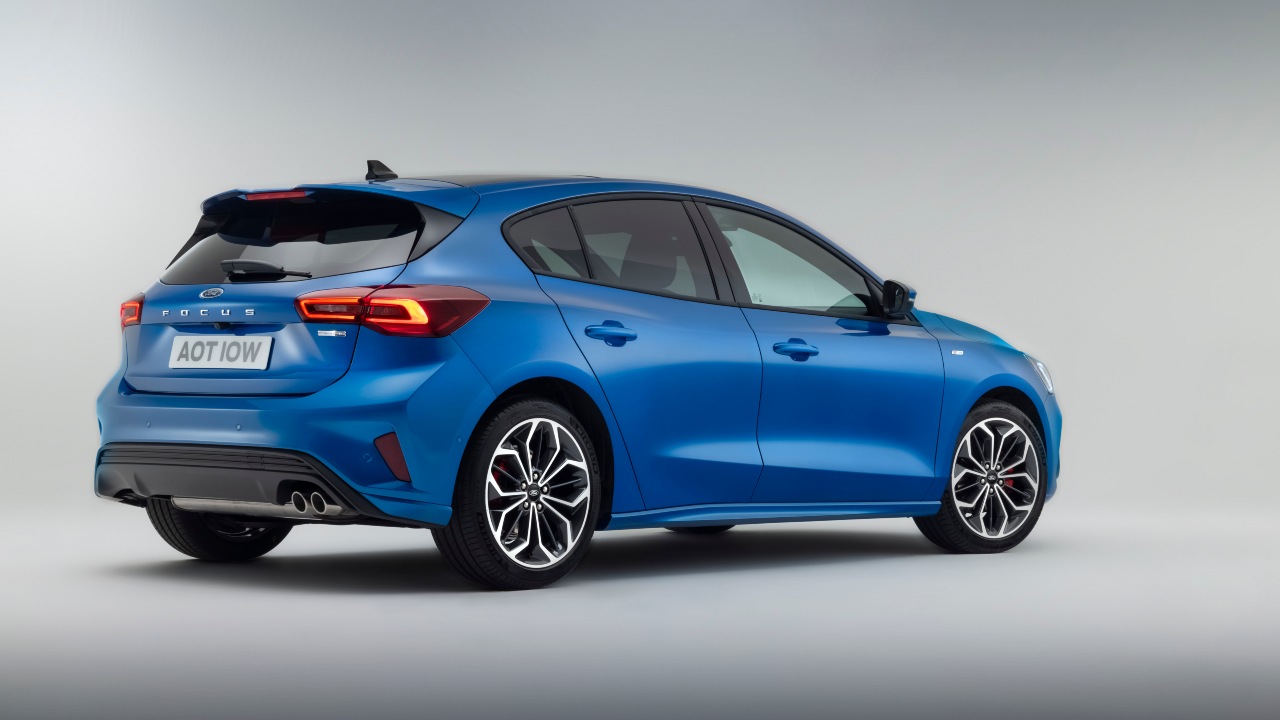
The final and fourth generation of the Focus came along in 2018, with a sleeker profile and a long estate version. Its rear passenger area opened up, making it more spacious than the third-generation version, while the boot space also improved, bringing it close to the size of the bulky second-generation Focus. This balanced the fluid lines of the third generation with the space and function of the second generation.
For the first time, the Focus was offered with hybrid technology, with a pair of Mild Hybrid (mHEV) 1.0-litre EcoBoost powertrains producing 123bhp or 153bhp. These powertrains deliver excellent fuel economy along with peppy performance, making them a preferred option for many buyers. For long-distance driving, some EcoBlue diesel engines were also available.
Although the fourth-gen Focus came in various trims, one stood out. The ST-Line. It bridged regular trim levels and the Ford Focus ST, offering the ST's sportier elements in a scaled-back package. With stiffer suspension than regular trims and more aggressive body kits paired with standard Focus engines, the ST-Line trim gave buyers a sportier guise, with more family-friendly, eco-friendly everyday practicality.
With stricter emissions regulations and the high engineering costs of developing a low-volume, high-performance hybrid, Ford dropped the race-inspired RS from the range. The ST, however, remained, becoming the Focus's sole performance variant and, this time, gaining the option of a throaty EcoBlue diesel engine.
With SUV crossovers and the rise of the EV coming over the hill, Ford ended production of the much-loved Focus in 2025, instead concentrating on electrifying the range. The popular family hatchback's tenure came to an end, leaving the car world wondering when the next car that will make such an impact will arrive.
Search Used Ford FocusFrequently asked questions
Yes, the used Ford Focus market offers plenty of options for every driver's lifestyle. From eco-friendly EcoSport-powered options to performance-led ST and RS trims, buyers have a broad range of choices when buying a used Focus.
The Mazda3, Volkswagen Golf, and Vauxhall Astra are considered comparable to the Ford Focus. All are family-oriented hatchbacks with plenty of trim and equipment options.
Discover Ford with Evans Halshaw
Fords have always been a staple on the UK's roads, offering something for everyone, and the Ford Focus was no exception. From entry-level trims to the RS series, the Focus could adapt to almost any driver. Like the Escort before it, the Focus was a much-loved model, with plenty of used models readily available to suit every lifestyle.
With a shift to electric powertrains and SUV crossovers, Ford has always been about innovation made for the everyday motorist and with so many new Ford models available today, there's never been a better time to discover the Ford range at your nearest Evans Halshaw Ford retailer.