Safe driving is paramount. So, when it comes to any disability or condition while driving, drivers must follow the law and the Highway Code to keep themselves, other road users, and pedestrians safe on the road.
Many disabilities and conditions do not necessarily prevent someone from driving safely. Specially adapted cars, aids such as glasses or hearing aids, and other equipment can support people behind the wheel, making driving safer and more accessible.
Whether you're commuting in your Hyundai IONIQ 5 or camping in your Dacia Bigster, these tips give people with disabilities or conditions the freedom and mobility to travel far and wide, maintain their sense of independence, and participate fully in everyday life.
One condition that can affect drivers is astigmatism. Astigmatism is a common eye condition affecting about 1 in 3 people worldwide. But what does this mean for those in charge of a vehicle, and can someone with astigmatism still drive safely?
What is astigmatism?
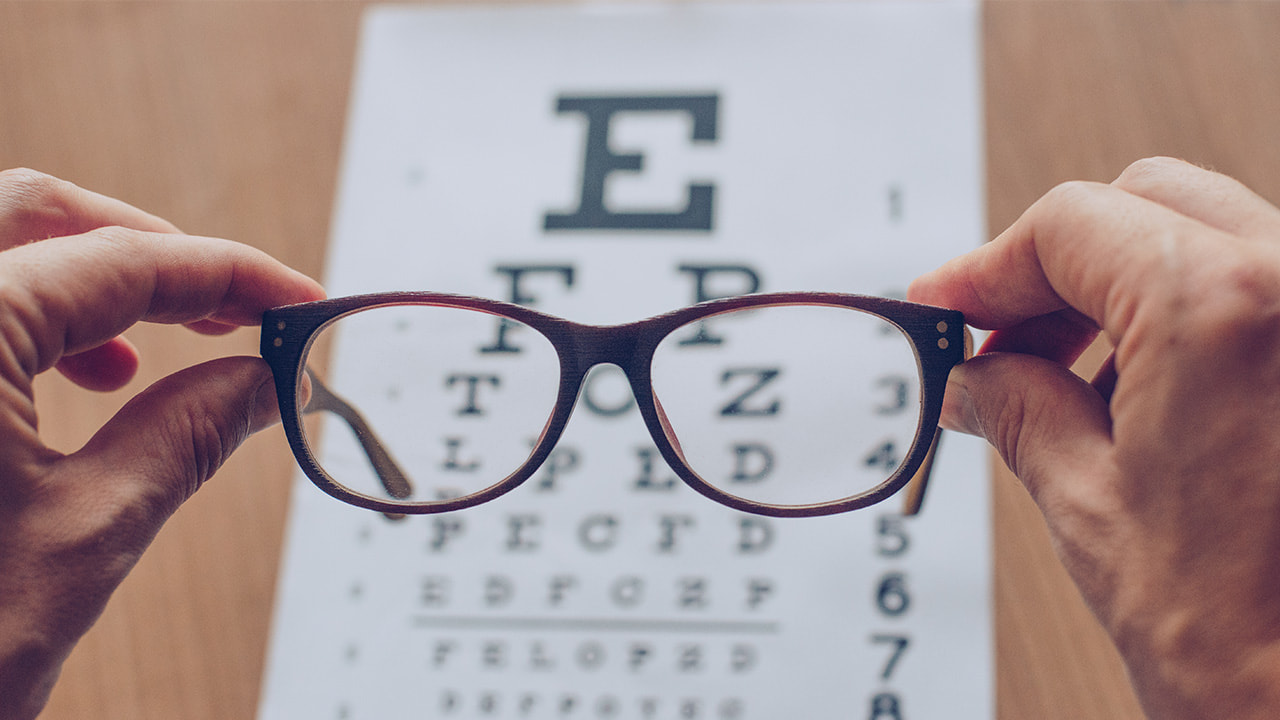
Astigmatism is a common eye condition caused by an unevenly curved cornea or lens that should be spherical to focus light correctly onto the retina. Drivers with astigmatism have irregularly shaped corneas or lenses, almost like a rugby ball, which prevents light from focusing correctly on the retina.
This results in blurry vision, especially at distance. It often occurs alongside other vision conditions such as myopia (nearsightedness) and hyperopia (farsightedness). People are more likely to be born with astigmatism, while some develop it later in life due to age-related eye changes, surgery, injuries, or other eye conditions. It can often be genetic and hereditary, meaning it frequently can run in families. If one of your parents has it, and you're starting out driving, young or older, then it's best to get checked by your local optician.
Symptoms of astigmatism include blurred or stretched vision, headaches, squinting to see clearly, and eye strain during prolonged tasks such as staring at a computer screen or TV for hours or reading a book.
What does astigmatism look like?
Depending on whether you're driving during the day or during the night, astigmatism can affect how you see your surroundings while driving. These visual effects can depend on how severe your condition is and, of course, if you're wearing corrective lenses.
What does astigmatism look like during the day?
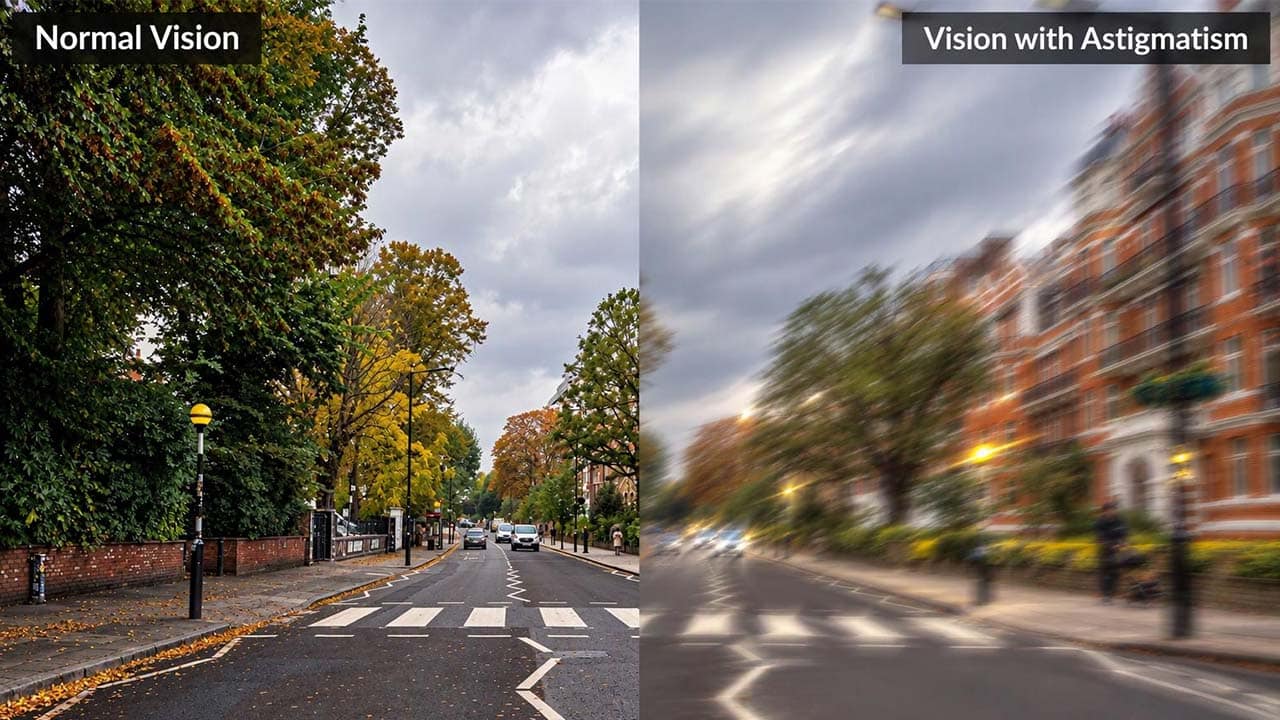
During the day, astigmatism can cause visual effects such as distant blur, making road signs and number plates look slightly out of focus and fuzzy until you get closer. You may squint a lot, which can lead to eye strain and fatigue by the end of your journey, especially on longer trips.
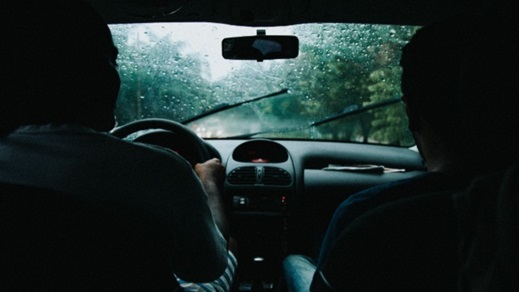
You may also notice that location names on signs, infotainment, and digital driver displays have a faint 'ghost' image or stretched edges. Another effect you may notice is that sunlight reflecting off surface water and other reflective surfaces can feel sharper and more uncomfortable than it does with normal vision.
What does astigmatism look like at night?
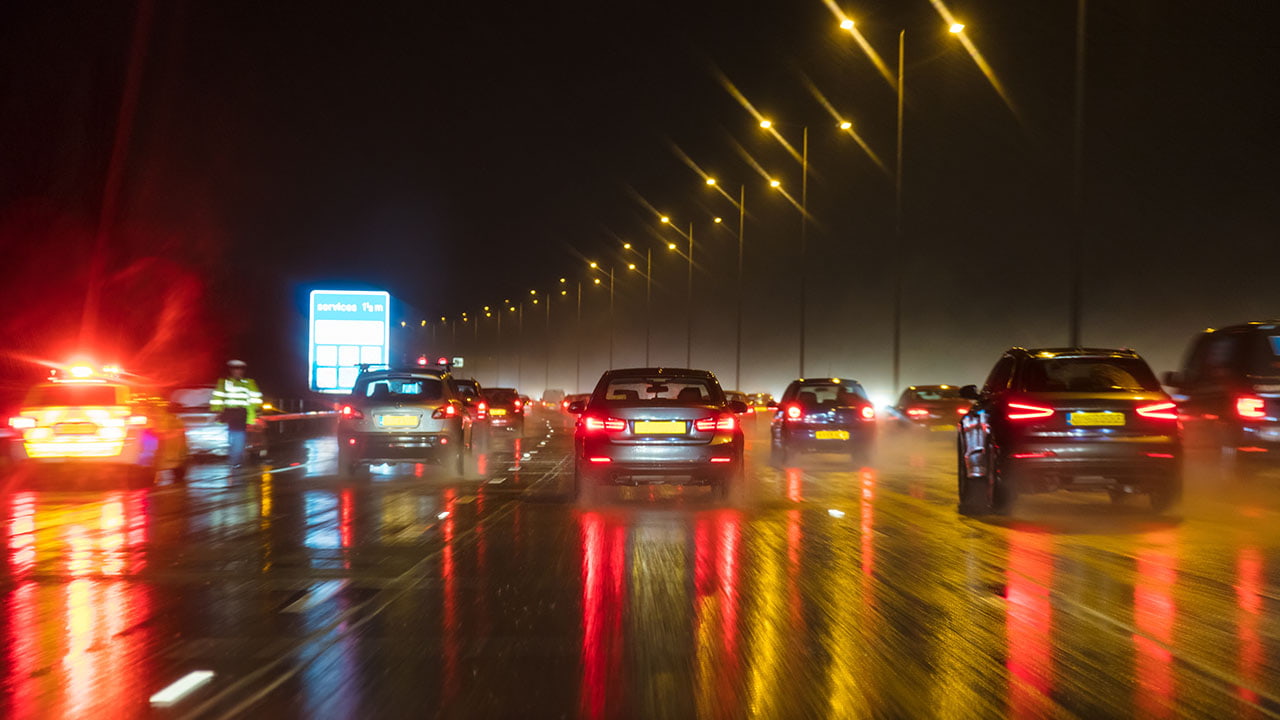
At night time and in low-light conditions is where astigmatism really is noticed. In low-light conditions, the blurry vision you experience during the daytime can actually get worse. This is because as outside light dims, your pupils dilate to let in more light, which can make blurry vision worse.
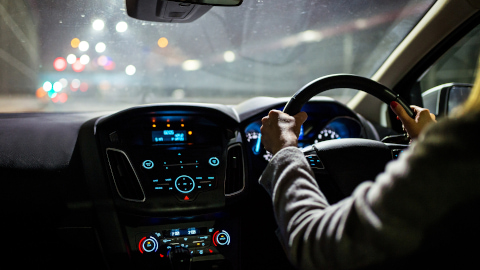
Headlights, traffic lights, and street lights all affect drivers with astigmatism. These lights create long, straight streaks across the centre, trailing off on each side like comet tails. Other drivers see halos, fuzzy glowing circles, or starburst patterns around lights.
How to drive with astigmatism
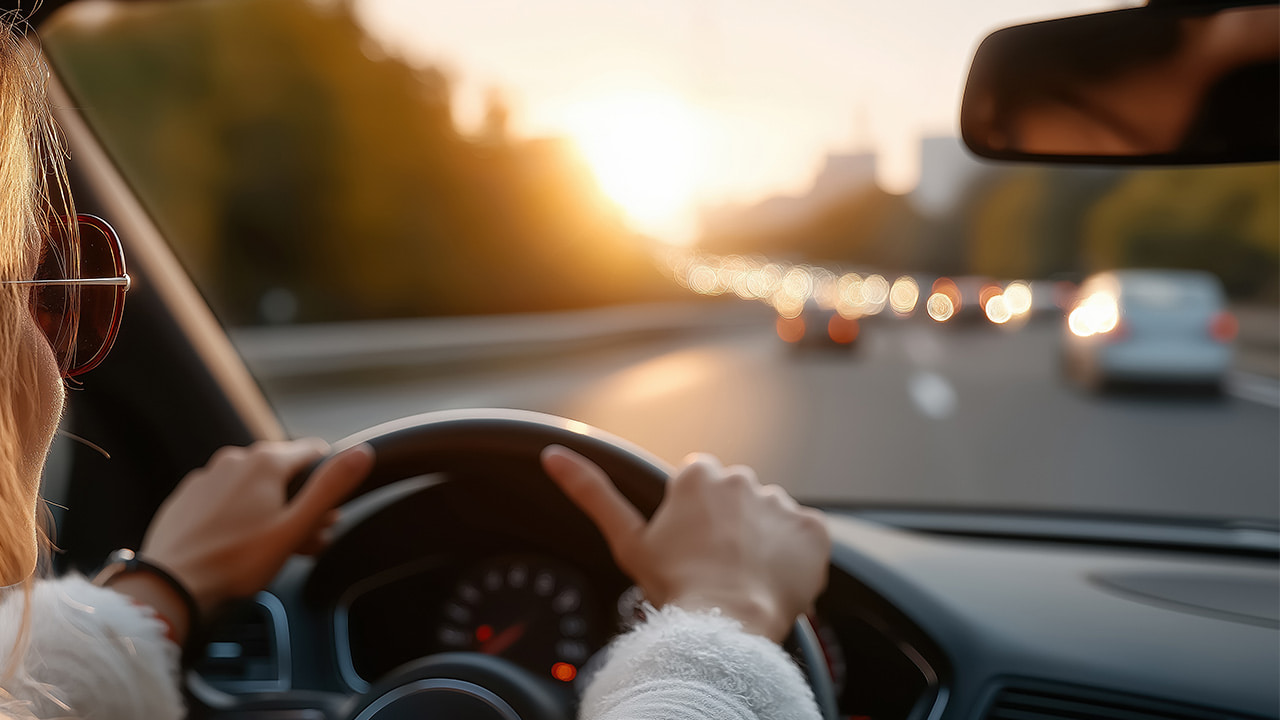
The good news is that, as long as you take a few practical steps and make a few changes to your driving habits, driving with astigmatism doesn't have to be restrictive. One of the first things you should do is to get it diagnosed correctly. Visit an optician for a comprehensive eye exam to ensure that it's astigmatism. And once you've been diagnosed, make sure you get the right glasses or contact lenses for the condition.
Anti-reflective or anti-glare coatings on glasses can help reduce streaks and halos from oncoming headlights, traffic lights, and street lights. If you prefer wearing contact lenses, toric or gas-permeable lenses can provide clearer and sharper vision correction than standard soft lenses. It's crucial to speak to a professional optician about your options to see which fits your astigmatism condition the best.
There are also practical driving tips for people with astigmatism. Keeping all vehicle mirrors, side and back windows, and the windscreens wiped down helps keep glare to a minimum. Also, do the same for your glasses.
Switch your rear-view mirror to its 'night' setting to reduce the blinding glare of headlights behind you; lowering the brightness a touch on your digital driver's display and infotainment screen can also help. And finally, allow extra time for night-time journeys, especially if it's rainy or you're driving in an unfamiliar location.
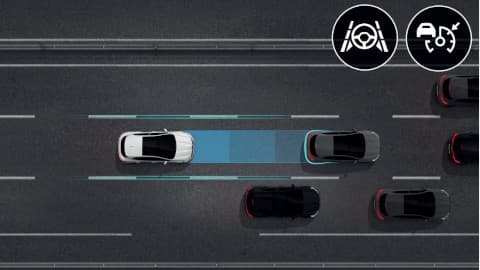
When choosing a car, consider the safety features and Advanced Driver Assistance Systems (ADAS) that it comes with. A higher driving position in SUVs such as the JAECOO 7 and Ford Kuga might give you a clearer view of the road, while reversing and 360-degree cameras in models such as the Hyundai Tucson and Peugeot 5008, respectively, can help with parking at night and in low-light conditions.
Frequently asked questions
No, you do not need to declare astigmatism to the DVLA (Driver and Vehicle Licensing Agency). You don't need to declare short-sightedness, long-sightedness, astigmatism, or other mild eye conditions to the DVLA as long as you use the correct glasses or lenses prescribed for your condition.
You must be able to meet the minimum driving standards test, such as a number plate check where you must be able to read a post-2001 vehicle number plate from a distance of 20 metres with glasses or contacts, if you wear them.
Astigmatism affects driving by affecting vision when driving. It can cause distance blur during the day and streaks, halos, and starburst patterns around headlights, traffic lights, and street lights at night.
Yes, it is harder to drive with astigmatism. However, with the correct lenses or glasses and practical driving tips such as keeping all mirrors and windows wiped down and allowing for extra time on journeys, especially during low-light or nighttime driving, it can be manageable.
How to stay safe on the road with astigmatism
Like many medical conditions, astigmatism doesn't mean driving has to be off the table. With the correct eyewear and a few practical adjustments to your driving habits, you can help keep yourself and other road users safe.
If you notice any changes to your vision, speak to your optician to ensure your prescription is up to date and that you're still safe to drive.
For other practical driving tips and road rule explanations, check out our driving and lifestyle guides, which help you stay informed and feel more confident behind the wheel. And most of all, stay safe while on the road.